



Program Details
Information about medical programs provided by each healthcare institution, including treatment details, schedules, etc.,
- medical treatment
- immunotherapy
- cancer
- immunotherapy
Neoantigen Dendritic Cell Therapy [Nakamura Gastroenterology Clinic]


Neoantigens are abnormal proteins that arise due to genetic abnormalities (genomic or gene mutations) occurring within cancer cells.
These neoantigens serve as patient-specific cancer antigens (markers of cancer) and provide significant advantages in immunotherapy, as outlined below.
Neoantigens are abnormal proteins that arise due to genetic abnormalities (genomic or gene mutations) occurring within cancer cells.
These neoantigens serve as patient-specific cancer antigens (markers of cancer) and provide significant advantages in immunotherapy as follows:
Personalized medicine:
Since genetic mutations in cancer cells differ from person to person, neoantigens also become unique markers specific to each patient.
Cancer-specific markers:
Neoantigens are peptides that are present only in cancer cells and not in normal cells.
High immunogenicity:
They are easily recognized as “foreign substances” by dendritic cells within the immune system, inducing strong T-cell responses and potentially leading to effective anti-tumor effects.
High safety:
As neoantigens are expressed only in cancer cells, T cells selectively target cancer cells without attacking normal cells.
Neoantigen-Based Dendritic Cell Immunotherapy
Genetic analysis is performed using the patient’s tumor specimen (e.g., surgical tissue). Neoantigens are then synthesized, and monocytes collected from the patient are differentiated into dendritic cells outside the body and exposed to these neoantigens. This process enables the creation of dendritic cell vaccines that “remember” the neoantigens.
Treatment Process:
1.Genetic analysis of cancer cells (approximately 1 month)
Tumor samples (e.g., surgical specimens) are obtained, and genetic sequencing, DNA, and RNA analyses are performed.
2.Neoantigen synthesis (approximately 3 weeks)
Neoantigens are synthesized based on information from abnormal genes.
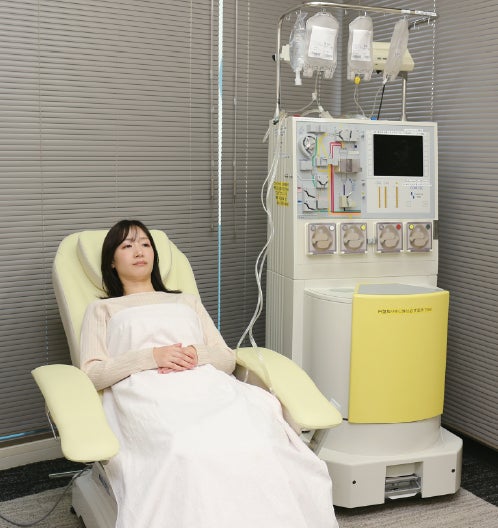
3.Apheresis and dendritic cell culture (approximately 2 weeks)
Dendritic cells are collected and cultured outside the body, and synthesized neoantigens are introduced during the culture process.
4.Subcutaneous injection
The cultured dendritic cells are administered via subcutaneous injection once every two weeks.
Within the body, T cells that receive cancer antigen information from dendritic cells will specifically attack cancer cells.
- Providing Medical Institution
-
Nakamura Gastroenterology Clinic
〒561-0832https://nakamura-icho.com/
2-22-8 Shonai Nishi-machi, Toyonaka City- Specialty
- Medical Oncology
Gastroenterology
Endoscopy (or Endoscopic Medicine)
- Remarks
- 【Indications / Conditions】
All types of cancer (excluding hematological malignancies)