


Program Details
Information about medical programs provided by each healthcare institution, including treatment details, schedules, etc.,
- 治療
Total Hip Replacement Surgery 【Kanazawa Medical University Hospital】
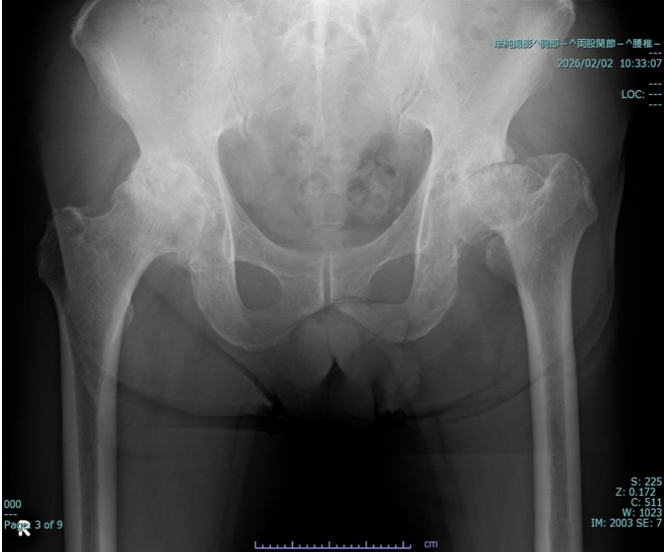
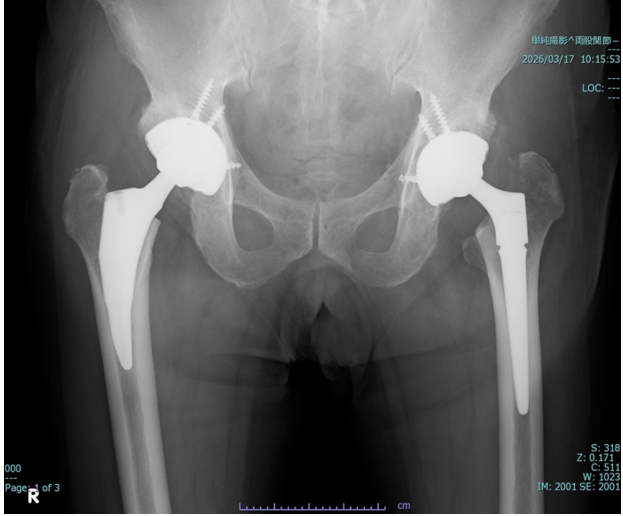

A treatment program for hip pain that does not improve with conservative therapy, aiming to relieve pain through joint replacement surgery and improve walking ability and quality of life (QOL).
Total hip arthroplasty (THA) is a standard treatment aimed at relieving pain and restoring walking ability in patients with hip pain and functional impairment that do not improve with conservative therapy, such as in osteoarthritis of the hip.
At our hospital, board-certified joint replacement specialists provide comprehensive care from preoperative evaluation to surgery and postoperative rehabilitation. We adopt surgical techniques that minimize damage to muscles and soft tissues, aiming to reduce postoperative pain and promote early recovery.
We also place strong emphasis on perioperative management and infection prevention to ensure a high level of safety. In addition, patient education is prioritized to create an environment where patients can undergo treatment with confidence.
- Providing Medical Institution
-
Kanazawa Medical University Hospital
〒920-0293https://www.kanazawa-med.ac.jp/~hospital/international/
Kahoku-gun Uchinada-machi Daigaku 1-1- Specialty
- 【Health Checkups】
Basic medical examinations
Abdominal ultrasound examination
Gastrointestinal endoscopy
Brain MRI/MRA examination
PET-CT examination
【Treatment】
MRI/Ultrasound fusion-guided prostate biopsy
Gastrointestinal surgical treatment for malignant tumors
Endoscopic surgery for brain tumors
Radiofrequency ablation therapy for peripheral nerves
Total hip replacement surgery
Regenerative therapy for knee joints
Combination chemotherapy for pediatric acute leukemia
Lens reconstruction surgery
Diagnosis and treatment of nephrotic syndrome
- Eligibility Criteria/Exclusions for Treatment
- This treatment is intended for patients with conditions such as osteoarthritis of the hip or femoral head necrosis who do not achieve sufficient improvement with conservative treatments (medication, rehabilitation, injections, etc.).
Patients experiencing pain while walking or difficulty in daily activities are considered suitable candidates.
There is no strict age limit; however, patients must be in a general condition suitable for general anesthesia and surgery.
Patients with comorbidities such as hypertension, diabetes, or heart disease may still be eligible if these conditions are well controlled.
Wheelchair access is available, and patients with limited mobility can also be accommodated.
- Remarks
- Orthopedics
https://www.kanazawa-med.ac.jp/~orthoped/
【Treatment Schedule】
At the initial visit, a clinical examination and imaging studies (X-ray, and CT/MRI if necessary) are performed to determine surgical indication.
If surgery is indicated, preoperative tests (blood tests, ECG, chest X-ray, etc.) are conducted to assess overall health.
Hospitalization typically occurs one day before surgery, and total hip replacement surgery is performed the following day.
Postoperatively, rehabilitation begins the next day, including early mobilization and walking training.
The hospital stay is approximately 2–3 weeks, and early discharge may be arranged upon request.
- Precautions / Contraindications
- Please bring a referral letter and any previous imaging data if available.
If you are taking anticoagulants or antiplatelet medications, please be sure to inform us in advance.
If you have any active infections (such as skin, urinary tract, or dental infections), surgery may need to be postponed. A dental check-up prior to surgery is recommended.
Underlying conditions such as diabetes should be well controlled before surgery.
After surgery, lifestyle guidance will be provided to prevent dislocation (such as avoiding excessive flexion or internal rotation).
Please also understand that artificial joints have a limited lifespan.