
Facility Details
View an overview of the medical facility, affiliated physicians, and available programs in one place.
- Kinki / Osaka
- medical treatment
- otorhinolaryngology
Medical Research Institute KITANO HOSPITAL, PIIF Tazuke-Kofukai
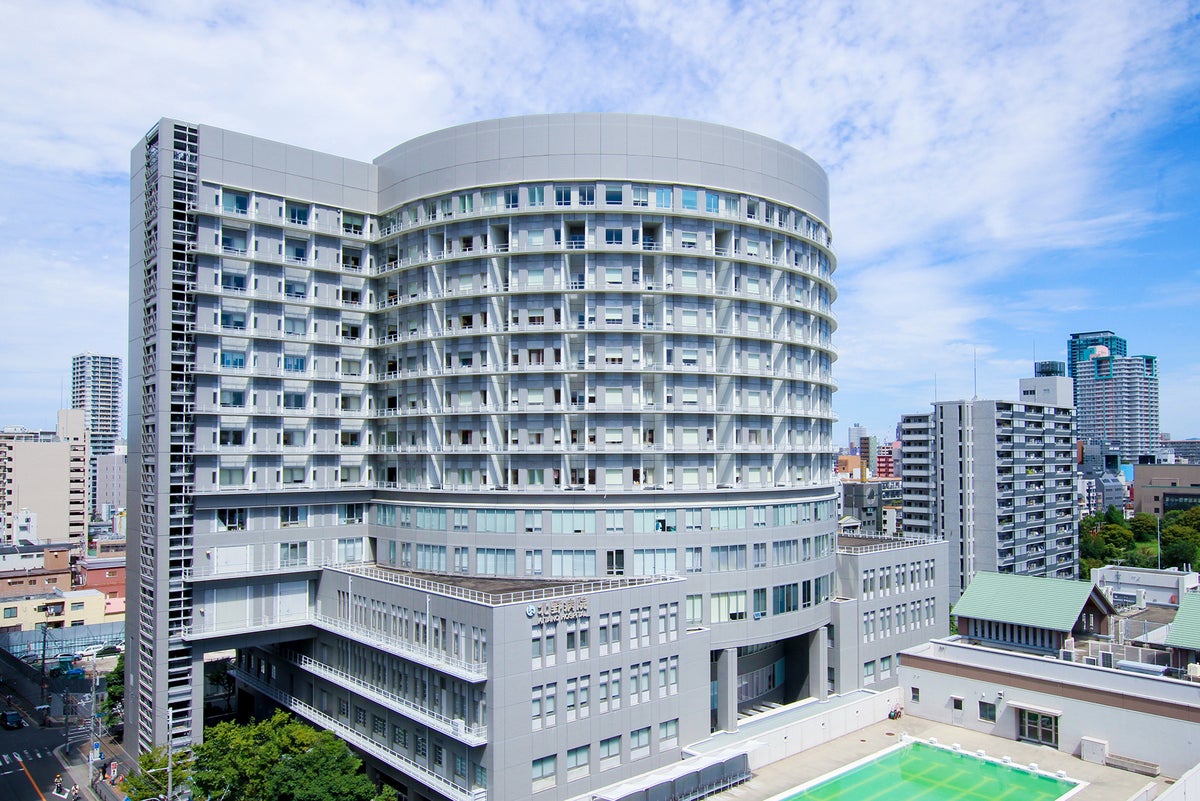
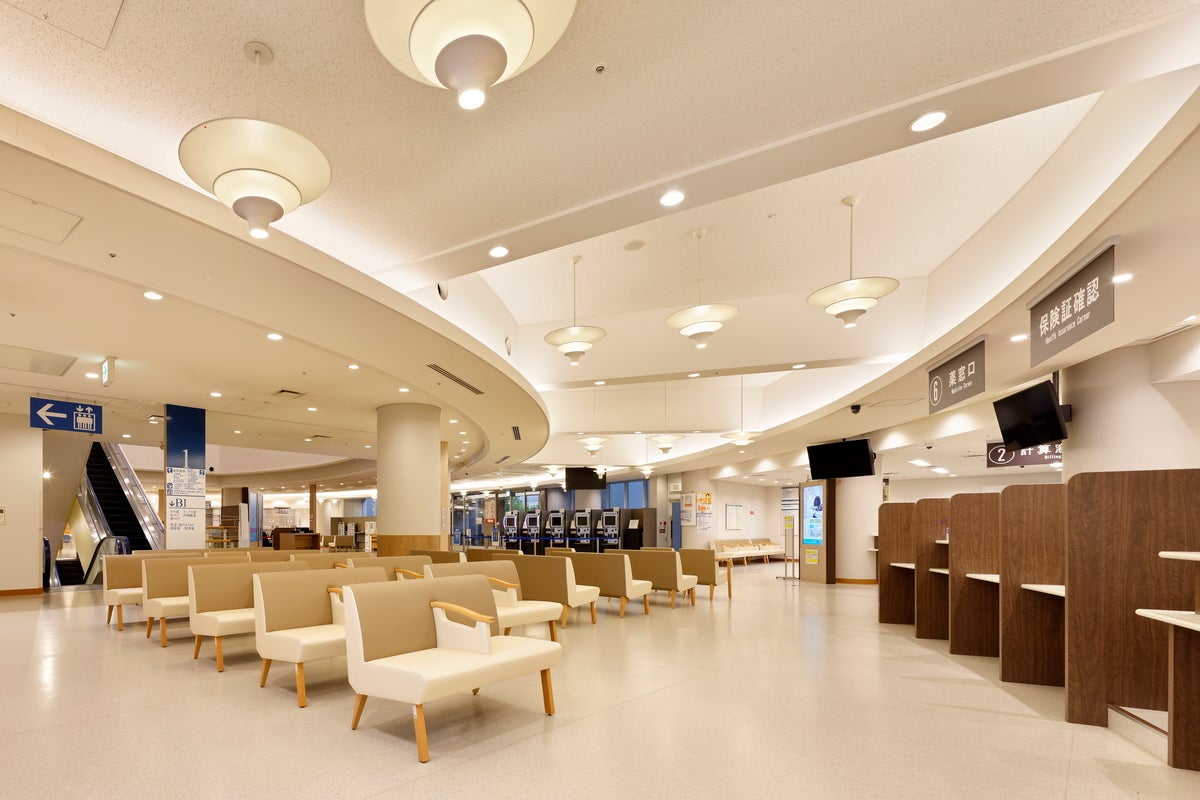

Our hospital, as its name suggests, is a clinical institution equipped with a medical research institute. Our mission is to contribute to the advancement of medicine through research while delivering the benefits of these advancements to our patients. The "Tympanic Membrane Regeneration Therapy" is one such achievement, and we are actively engaged in various other research initiatives as well.
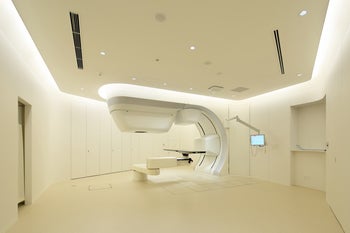
Our hospital offers 33 medical departments, covering nearly all diseases, with many physicians dispatched from Kyoto University’s Faculty of Medicine. This structure allows for advanced treatments through close collaboration among departments. Additionally, we actively adopt state-of-the-art equipment, including MR-guided Focused Ultrasound Surgery (MRgFUS), the da Vinci Surgical System, and the Linear Accelerator (LINAC) for high-precision radiotherapy, providing a wide range of treatment options tailored to patient needs.
For inpatients, those who wish to and receive approval from their physician can focus on their treatment in special wards located on upper floors, offering panoramic views of the city center.
- Location
- 〒530-8480
2-4-20 Ogimachi, Kita-ku, Osaka, Osaka
- Specialty
- Tympanic Membrane Regeneration Therapy(https://www.kitano-hp.or.jp/section/hearingloss_center)
MR-Guided Focused Ultrasound (MRgFUS) (https://www.kitano-hp.or.jp/section/nosinkei/furue)
- Facility details
- 【Location】
Situated in the heart of Osaka, our hospital is located in a region adjacent to a major transportation hub, offering convenient rail access from Kansai International Airport. The surrounding area features numerous hotels and restaurants, providing a variety of options for accompanying family members or caregivers during their stay.
Available Programs
-
Tympanic Membrane Regeneration Therapy (Kitano Hospital Medical Research Institute)
This is a treatment method that closes perforations in the tympanic membrane through the ear canal using ReTympa, a drug specifically developed for tympanic membrane regeneration, and a biological adhesive (fibrin glue). This therapy is a novel regenerative medicine approach that aims to close perforations that do not heal naturally without conventional surgical procedures, instead utilizing a relatively simple procedure.
① Features: Performed under a microscope or endoscope, this surgery does not require external skin incisions or autologous tissue harvesting. ② Duration: Tympanic membrane regeneration surgery: 20–30 minutes Tympanoplasty: 30–90 minutes (Surgical method varies depending on the condition) ③ Treatment Timeline: Outpatient Examinations (2 days) Surgery & Hospitalization: 1 night & 2 days or 2 nights & 3 days (Day surgery may also be possible). However, if active infection or inflammation is detected during (1) outpatient examinations, treatment for the infection or inflammation is required first, and a recovery period may be necessary before (2) surgery. Postoperative Follow-up (about 3 weeks after surgery): The tympanic membrane's regeneration progress is checked. If regeneration is not proceeding well, a repeat procedure may be performed on the same day. ④ Clinical Results: From 2021 to 2023: 667 cases Success rate: Over 90% Hearing improvement observed in nearly all cases ⑤ Effectiveness: If tympanic membrane regeneration proceeds smoothly, hearing is often improved. If the only cause of hearing loss is tympanic membrane perforation, hearing can improve to the patient’s natural hearing ability limit, enhancing speech clarity. Once the tympanic membrane is fully regenerated and dry, daily life restrictions (e.g., swimming, bathing) are minimized. Closing the tympanic membrane perforation also enhances resistance to infections, reducing the risk of otitis media. Tympanic Membrane Regeneration Introduction Video https://www.youtube.com/watch?v=4MeGa1_IO_8
View Details -
MR-GuidedFocused Ultrasound Surgery (FUS) (Kitano Hospital Medical Research Institute)
This treatment method involves securing the patient's head in a therapeutic helmet equipped with ultrasonic transducers. These transducers focus ultrasound waves on the neural circuit hub responsible for tremors, generating heat to coagulate the target tissue. As an advanced, non-invasive procedure, it offers high safety and has garnered significant attention.
■Opening of Tremor/Parkinson's Disease Outpatient Clinic Kitano Hospital has opened a new clinic for those who wish to receive treatment for "tremors/Parkinson's disease." Many people experience "tremors," and symptoms such as hands shaking, difficulty writing, difficulty using chopsticks, and difficulty drinking water from a cup may be "tremors" caused by "essential tremor." In addition to "tremors" in the hands, "essential tremor" can also cause head shaking and trembling voice. In the treatment of this "essential tremor," there are often problems such as the medication being ineffective or not being able to take the medication properly due to side effects. In addition, some people have difficulty curing "tremors," a symptom of "Parkinson's disease." In addition, some people have difficulty curing motor symptoms such as "sluggish body movements" or "dyskinesia" (motor complication), in which the body moves involuntarily when taking medication. At our hospital, we perform surgical treatment for essential tremor, tremors of Parkinson's disease, and motor symptoms and complications of Parkinson's disease. Consultations are accepted at the Tremor/Parkinson's Disease Outpatient Clinic. ■New "non-incision" surgery option A new "non-incision" surgery option has been added to the surgical treatment for tremors and Parkinson's disease. Currently, there are three surgical treatments approved as insurance treatment for tremors: 1. Deep brain stimulation (DBS) 2. Stereotactic ablation 3. Focused Ultrasound Surgery (FUS) Of these, focused ultrasound therapy is the latest "non-incision" and is attracting attention as a safe method. By simply using ultrasound, surgical procedures such as cutting with a scalpel or drilling holes in bones are not required, and there is no need to implant a pacemaker-type device used in deep brain stimulation therapy. Focused ultrasound therapy is a groundbreaking treatment in which the patient enters the MRI room with the head fixed to the device, focuses ultrasound on a part of the brain, and suppresses tremors while checking the effectiveness and safety. Because it is a non-incision method, patients can undergo treatment with peace of mind compared to conventional surgery. Our hospital will begin offering focused ultrasound therapy in March 2021. At this time, it is only performed on symptoms on one side of the body, either the right or left. Focused ultrasound therapy is a treatment approved by insurance for essential tremor and tremors in Parkinson's disease, as well as the motor symptoms and motor complications of Parkinson's disease. During the examination, we will ask about the symptoms of tremors and Parkinson's disease and previous treatments, and we will also measure the skull density with a head CT scan to determine whether focused ultrasound therapy is possible. In addition, in order to place the ultrasound device in close contact with the scalp during treatment, it is necessary to shave all of the hair. ①Characteristics: Since there is no need for trepanation (drilling a hole in the skull) or implantation of equipment, there is a low risk of bleeding or infection, and the burden on the body is low. Treatment is performed while checking the exact position and temperature in real time with MRI. During treatment, ultrasound is irradiated and the effectiveness is assessed while confirming the situation with the doctor. In order for the ultrasound energy to safely reach the intracranial target, hair must be shaved. ②Time required: The surgery itself usually takes about 3 to 4 hours. ③Number of days: ⑴Outpatient examination (3 days), ⑵Surgery/hospitalization (2 nights and 3 days), but there must be a gap of about 2 weeks between ⑴ and ⑵. ④Results: Results from 2021 to 2023 → 163 cases ⑤Effects: It is a palliative treatment aimed at reducing the symptoms of hand tremors, rather than a radical treatment that cures the disease itself. FUS Brochures https://www.kitano-hp.or.jp/wp-content/uploads/2024/12/FUS_kaisetsu_en.pdf https://www.kitano-hp.or.jp/wp-content/uploads/2024/12/FUS_kaisetsu_zh.pdf https://www.kitano-hp.or.jp/wp-content/uploads/2024/12/FUS_kaisetsu_ko.pdf FUS introduction video https://www.youtube.com/watch?v=NgD-G6_T4ZM
View Details