
Facility Details
View an overview of the medical facility, affiliated physicians, and available programs in one place.
- Kanto / Chiba
- medical treatment
- orthopaedic surgery
- cosmetic
- apoplectic stroke・brain infarction
- others
- neuropathy
- cosmetic surgery
Chiba University Hospital
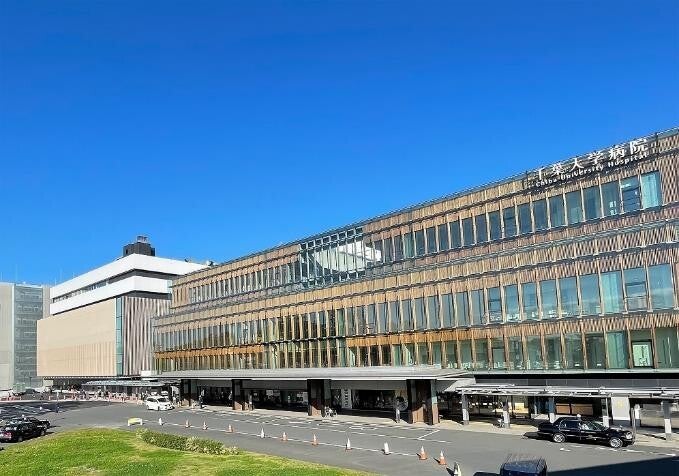
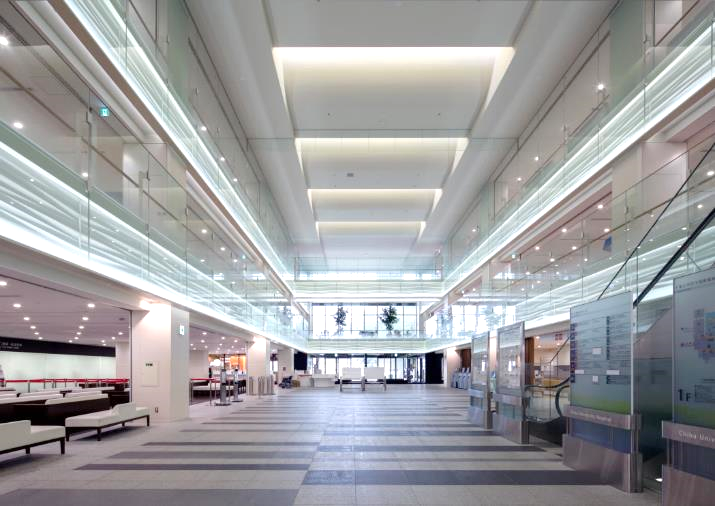
Located in Chiba City, one of the central cities of the Tokyo metropolitan area and just 40 minutes by car from Narita Airport, this national university hospital boasts a history of 150 years. Trusted deeply by the local community, the hospital contributes to the region through advanced acute care, cutting-edge medical services, pediatric care, perinatal care, geriatric medicine, genomic medicine, and preventive healthcare.
Located in Chiba City, one of the central cities in the Tokyo metropolitan area and approximately 40 minutes by car from Narita Airport, this national university hospital boasts a proud history of over 150 years. Highly trusted by the local community, the hospital contributes to regional healthcare through advanced acute care, cutting-edge medical services, pediatric care, perinatal care, geriatric medicine, genomic medicine, and preventive care.
With over 3,000 medical professionals and administrative staff working in close collaboration, the hospital is dedicated to improving the quality of care and the overall patient experience. The hospital has more than 35 clinical departments and over 800 beds, enabling comprehensive and multidisciplinary treatment planning for patients requiring highly complex care.
The hospital also places great emphasis on training future healthcare professionals. One notable initiative is the regular “bedside clinical training” led by the hospital director, who accompanies students on ward rounds to instill a strong sense of responsibility and mission in caring for patients.
The spacious and brightly lit outpatient lobby is well-regarded and is frequently used as a filming location for movies and TV dramas, contributing to the hospital's nationwide recognition.
- Location
- 〒260-8677
1-8-1 Inohana, Chuo-ku, Chiba-shi Chiba
- Website
- https://www.ho.chiba-u.ac.jp/
- Facility Overview
- 【Location】
Located approximately 40 minutes by car from Narita Airport and 40–50 minutes by train from Tokyo Station. Chiba City, the capital of Chiba Prefecture, has a population of approximately 980,000 and is well-equipped with urban infrastructure. At the same time, it offers a rich natural environment with easy access to the sea.
【Available Diagnostic and Therapeutic Equipment】
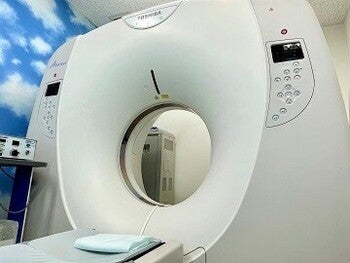
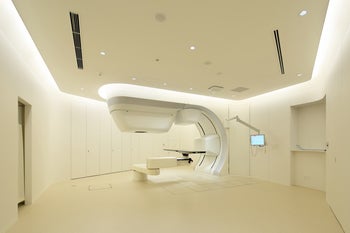
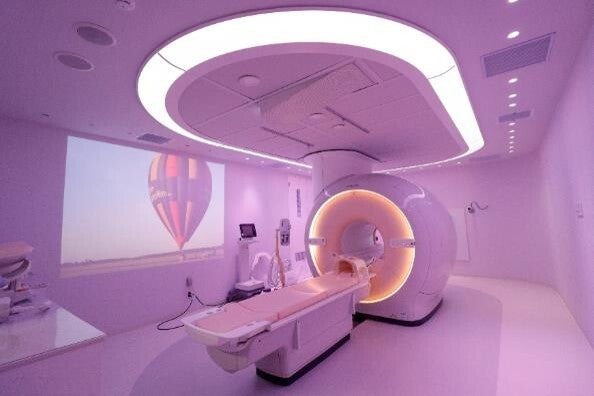
CT, MRI, MR-Linac (MRI-guided radiation therapy system), angiography system, SPECT, mammography, PET-CT, intensity-modulated radiation therapy (IMRT) system, remote-controlled brachytherapy system, and endoscopic surgery support equipment.
【On-Campus Facilities】
Within the Chiba University Inohana Campus, where the hospital is located, there are two restaurants nearby. Inside the hospital, amenities include a Tully’s Coffee café, convenience stores (two Lawson and one FamilyMart), ATMs, a post office, coin lockers, a library, a courtyard, and food trucks available during lunchtime.
- Specialty
- (1)Department of NeurologyCrow-Fukase Syndrome
(2)Department of Plastic and Aesthetic Surgery
Craniofacial Bone Deformities, Corrective Surgery for Jaw Deformities
(3)Department of Hematology
Extracorporeal Photopheresis (ECP)
(4)Department of Orthopedic Surgery
Total Shoulder Arthroplasty / Artificial Shoulder Joint Replacement
- Third-party certification
- JIH
Available Programs
-
Chemotherapy for POEMS syndrome【Chiba University Hospital】
We provide individualized treatment plans for patients with POEMS syndrome, offering the most appropriate therapy based on each patient's condition
We provide individualized treatment plans for patients with POEMS syndrome, offering the most appropriate therapy based on each patient's condition. At Chiba University Hospital, patients with POEMS syndrome visit from across Japan, making it one of the leading centers for treatment of this rare disease worldwide. With our extensive clinical experience, we are able to offer the most suitable treatment for each patient. Chemotherapy is administered either orally or by injection during hospitalization. The length of hospital stay varies depending on the treatment protocol, typically ranging from 2 to 4 weeks.
View Details -
Craniofacial Reconstructive Surgery for Cranio-maxillofacial Deformities【Chiba University Hospital】
Craniofacial deformities may be congenital or acquired due to trauma. Through advanced craniofacial reconstructive surgery—particularly targeting skeletal abnormalities—both functional recovery and significant aesthetic improvement can be achieved.
Craniofacial deformities may be congenital or acquired (e.g., due to trauma). Our advanced plastic and reconstructive surgical techniques—especially those targeting skeletal abnormalities—achieve not only functional restoration but also significant aesthetic improvement. (Features) We use a combination of surgical techniques such as osteotomy, distraction osteogenesis, and flap reconstruction to correct craniofacial skeletal abnormalities. (Treatment Duration) The treatment duration varies widely depending on the case. Some procedures can be completed on an outpatient basis, while others may require hospitalization for several weeks or multiple staged surgeries. (Results & Outcomes) Patients come from across Japan to receive this treatment. In nearly all cases, significant improvement has been achieved, and the procedure boasts a high level of patient satisfaction. Depending on the treatment, the benefits may become evident some time after surgery.
View Details -
Extracorporeal Photopheresis (ECP) Therapy (J041-2)【Chiba University Hospital】
Extracorporeal photopheresis (ECP) therapy is expected to improve symptoms of chronic graft-versus-host disease (chronic GVHD) that occurs after hematopoietic stem cell transplantation, and to help reduce the use of steroid medications.
Extracorporeal photopheresis (ECP) therapy is expected to improve symptoms of chronic graft-versus-host disease (chronic GVHD) following hematopoietic stem cell transplantation and to reduce the need for steroid medications. Chronic GVHD after allogeneic hematopoietic stem cell transplantation for hematologic diseases can affect multiple organs throughout the body, including the skin, oral mucosa, eyes, lungs, liver, muscles, and bones. In severe cases, it may lead to secondary infections and a significant decline in quality of life (QOL). ECP is a procedure in which white blood cells are separated from the patient’s blood, exposed to ultraviolet light outside the body, and then reinfused. This therapy is expected to relieve GVHD symptoms and reduce steroid use. At the start of treatment, hospitalization for about five days is required. After that, therapy is continued on an outpatient basis. Each session takes approximately 2 to 3 hours, and the treatment is performed over 31 sessions, typically on two consecutive days per week or month.
View Details -
Shoulder Arthroplasty【Chiba University Hospital】
With an aging population, the number of patients with glenohumeral osteoarthritis, massive irreparable rotator cuff tears, or cuff tear arthropathy—an end-stage condition of rotator cuff tears—is increasing. In such cases, anatomical or reverse total shoulder arthroplasty can effectively reduce pain and restore shoulder elevation.
With the aging of society, the number of patients with glenohumeral osteoarthritis, massive irreparable rotator cuff tears, and cuff tear arthropathy—the end stage of rotator cuff injury—is increasing. For these patients, anatomical total shoulder arthroplasty or reverse total shoulder arthroplasty can provide pain relief and improve shoulder elevation. At our hospital, approximately 100 shoulder arthroplasties are performed each year. For anatomical total shoulder arthroplasty, shoulder elevation typically improves from 90° preoperatively to 145° postoperatively, and external rotation improves from 10° to 45°. In reverse total shoulder arthroplasty, elevation improves from 60° to 135°, and external rotation from 15° to 42°, showing significant functional gains. Patients are hospitalized the day before surgery, with the procedure performed the following day. Discharge generally occurs within 1 to 2 weeks postoperatively. After discharge, patients continue rehabilitation at a local facility.
View Details